Cleaning Validation Plates (Coupons)
Cleaning validation plates—also called coupons—are defined test surfaces used to qualify and monitor cleaning procedures (CIP/COP), verify rinse effectiveness, and establish validated recovery factors for analytical methods.
Cleaning Validation Plates Catalog (10 × 10 cm)
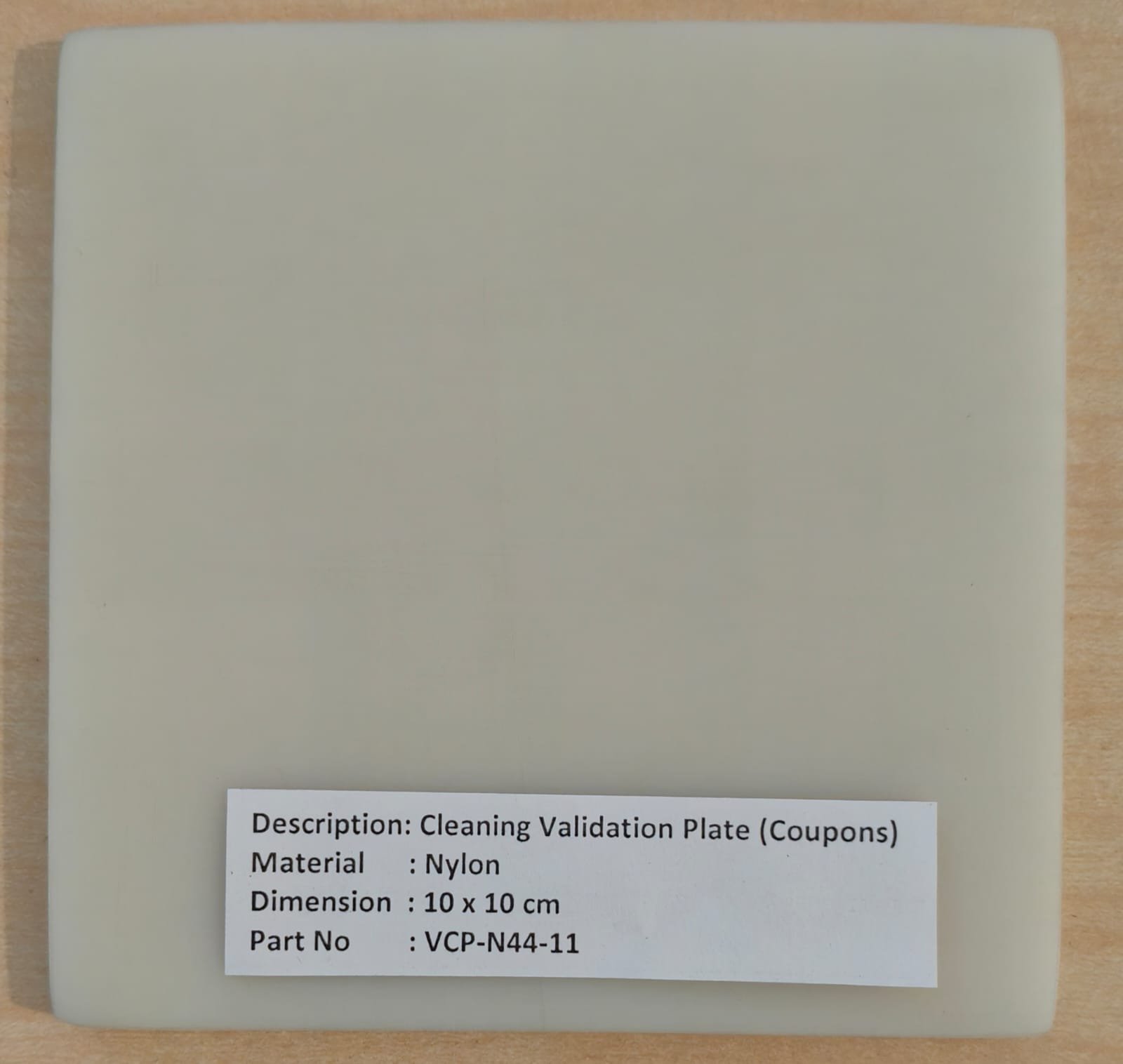
Cleaning Validation Plate (Coupons) – Nylon
- Material: Nylon
- Dimension: 10 × 10 cm
- Part No: VCP-N44-11
Nylon cleaning validation plate is used when you need a tough engineering‑polymer surface coupon to qualify residue recovery and cleaning effectiveness on polymer contact parts (liners, bushings, guides, wear strips). Nylon’s slightly polar amide backbone can retain hydrophilic soils and surfactants; therefore it is a strong “polymer worst‑case” coupon for detergent screening, alkaline/acid wash comparison, and CIP cycle optimization.
- Typical lab use: swab recovery studies, rinse vs swab method comparison, cleaning agent compatibility mapping.
- Why Nylon matters: evaluates adsorption/film formation of aqueous residues, sugars, buffers, and cleaning surfactants on polymer surfaces.
- Best for: process equipment with polymer components where metal coupons alone do not represent the true product contact surface.
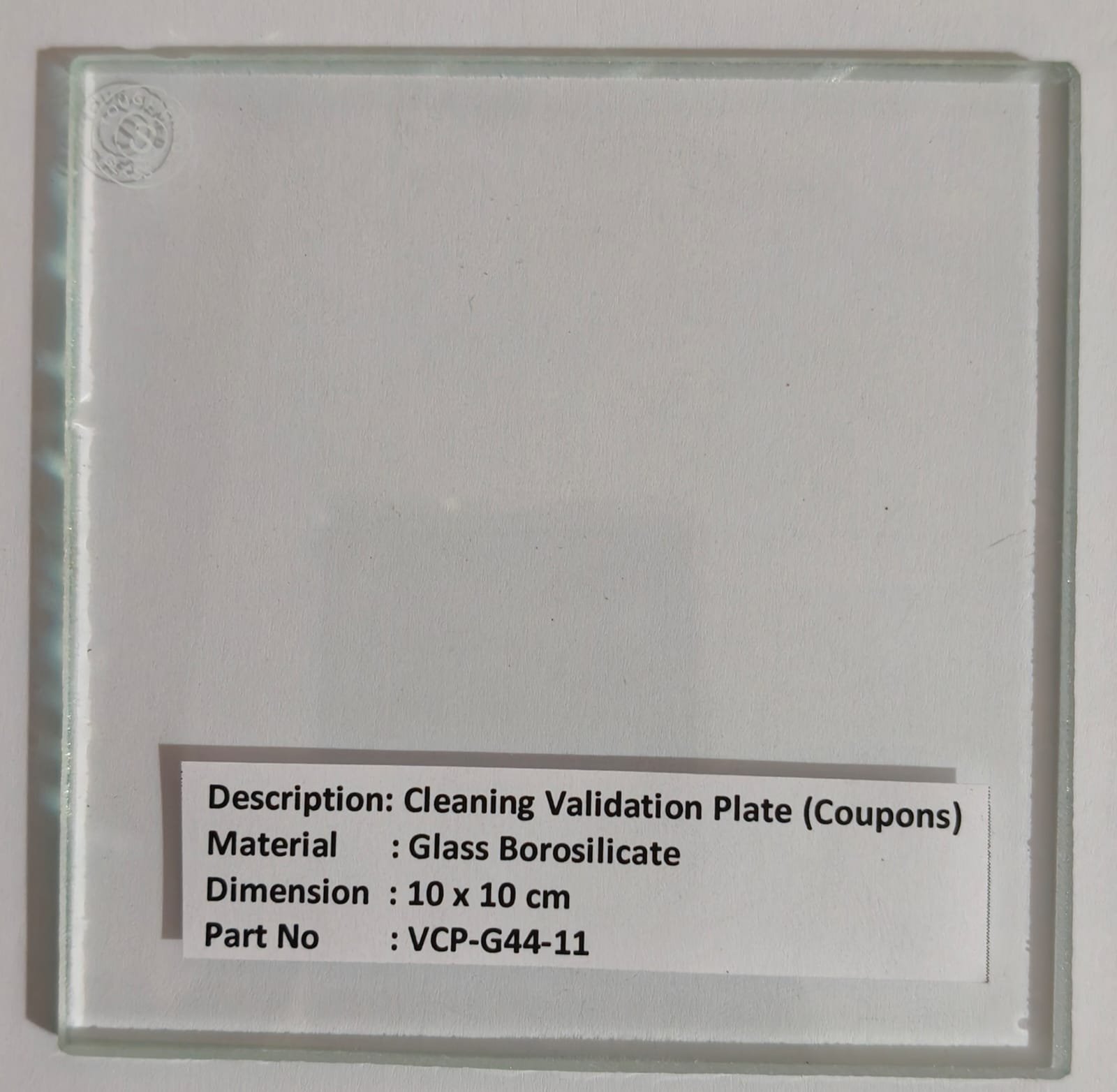
Cleaning Validation Plate (Coupons) – Glass Borosilicate
- Material: Glass Borosilicate
- Dimension: 10 × 10 cm
- Part No: VCP-G44-11
Borosilicate glass cleaning validation coupon is selected for inert, non‑reactive surface verification—ideal for glass‑lined vessels, glass sample contact, and lab‑scale process trains. Glass is smooth yet can show strong wetting with aqueous residues; it is excellent for demonstrating repeatable swabability, low background, and solvent resistance during method validation.
- Typical lab use: recovery factor determination for API residues, TOC cleaning verification, and visible residue checks on transparent surfaces.
- Why glass coupon: chemically stable across acids/alkalis; supports aggressive solvents without surface change, giving consistent recovery data.
- Best for: glass‑lined reactors, glass transfer lines, lab glass contact surfaces, and studies where adsorption must be minimized.
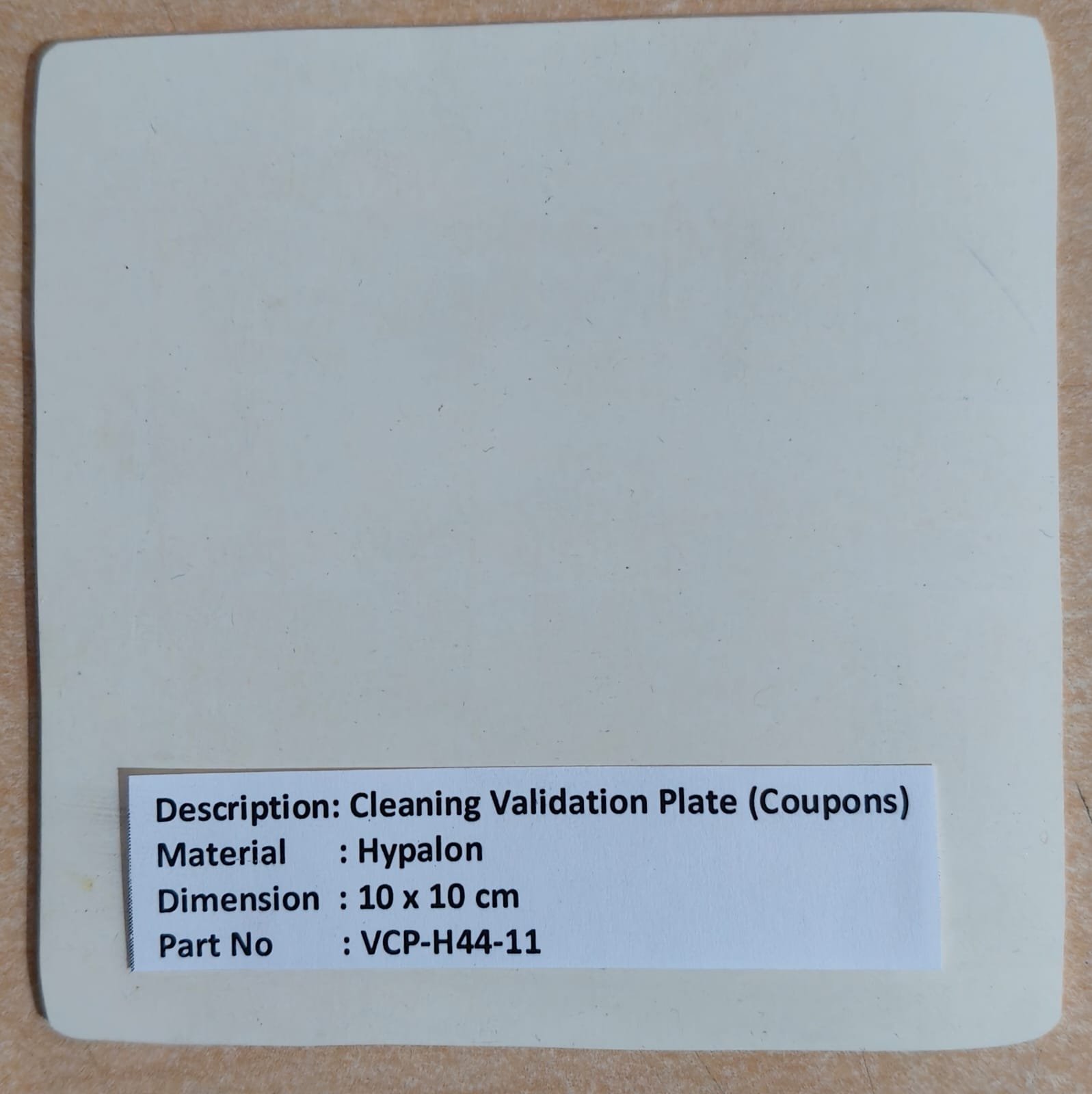
Cleaning Validation Plate (Coupons) – Hypalon
- Material: Hypalon
- Dimension: 10 × 10 cm
- Part No: VCP-H44-11
Hypalon (CSM) cleaning validation plate is used to represent chlorosulfonated polyethylene elastomer surfaces found in flexible connectors, gaskets, and protective linings. Hypalon is known for chemical and weather resistance, but elastomeric surfaces can trap residues in micro‑texture—making it valuable for “difficult to clean” recovery qualification.
- Typical lab use: challenging swab recovery studies, elastomer compatibility testing, and detergent selection for rubber‑like surfaces.
- Why Hypalon coupon: stresses the cleaning process for oily soils, viscous formulations, and adhesive films that can embed into elastomers.
- Best for: equipment with elastomeric liners/seals where residue carryover risk is higher than on metals.

Cleaning Validation Plate (Coupons) – Polycarbonate
- Material: Polycarbonate
- Dimension: 10 × 10 cm
- Part No: VCP-C44-11
Polycarbonate cleaning validation coupon represents hard, transparent engineering plastic surfaces used in guards, sight windows, and components where impact resistance is required. Polycarbonate can be sensitive to certain solvents and stress‑cracking agents, so it is a practical coupon for verifying that your cleaning chemistry and exposure time are effective yet non‑damaging.
- Typical lab use: CIP chemistry screening, compatibility checks (alkali/oxidizers/solvents), and residue recovery factor generation on plastics.
- Why polycarbonate coupon: captures real‑world risk of surface haze/cracking while still demanding good recovery of residues and surfactants.
- Best for: transparent process windows, protective covers, polymer components in pharma/biotech skids.
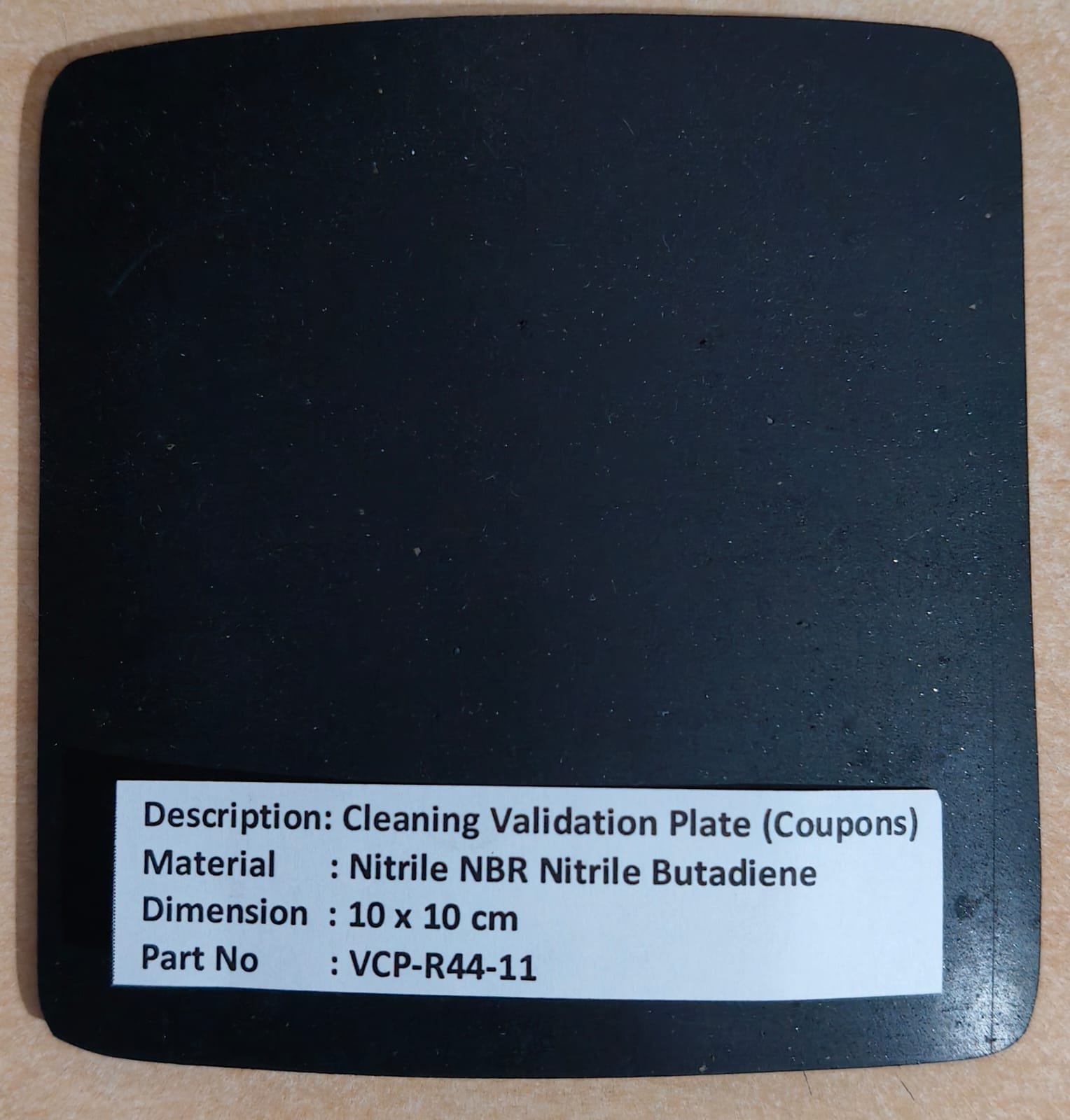
Cleaning Validation Plate (Coupons) – Nitrile (NBR)
- Material: Nitrile NBR (Nitrile Butadiene)
- Dimension: 10 × 10 cm
- Part No: VCP-R44-11
Nitrile (NBR) cleaning validation plate is intended for rubber sealing surfaces and contact points exposed to oils, greases, and hydrophobic residues. NBR’s oil resistance makes it common in O‑rings and seals; however rubber surfaces can hold residues strongly. This coupon helps you validate swab technique, solvent selection, and cleaning cycle strength for elastomer contact parts.
- Typical lab use: recovery studies for oily/cream residues, detergent vs solvent wipe comparison, and elastomer residue carryover assessment.
- Why NBR coupon: simulates adsorption into rubber matrix and micro‑texture, creating realistic worst‑case recovery challenges.
- Best for: seals, gaskets, hoses, and any NBR‑based contact surface in manufacturing lines.
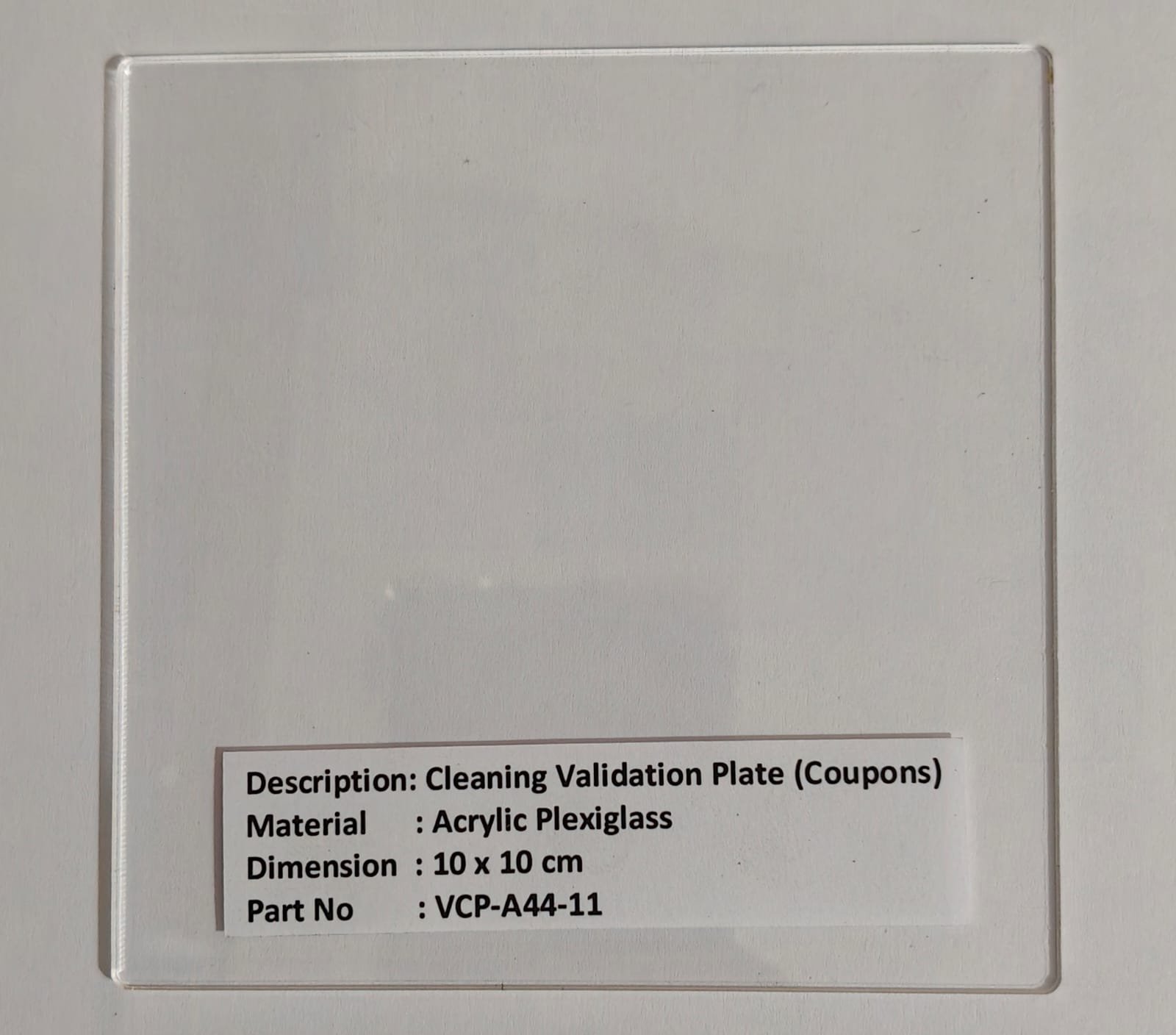
Cleaning Validation Plate (Coupons) – Acrylic (Plexiglass)
- Material: Acrylic Plexiglass
- Dimension: 10 × 10 cm
- Part No: VCP-A44-11
Acrylic (Plexiglass) cleaning validation coupon is chosen for transparent polymer surfaces where clarity and dimensional stability are important. Acrylic behaves differently from polycarbonate and can be affected by strong solvents; therefore it is widely used for validating “safe yet effective” cleaning programs on viewing panels and polymer housings.
- Typical lab use: cleaning agent compatibility confirmation, swab recovery factor studies, and visual residue evaluation on clear surfaces.
- Why acrylic coupon: highlights solvent‑induced crazing risk and verifies that cleaning removes residues without damaging transparency.
- Best for: covers, inspection windows, lab equipment panels, and polymer components in controlled areas.
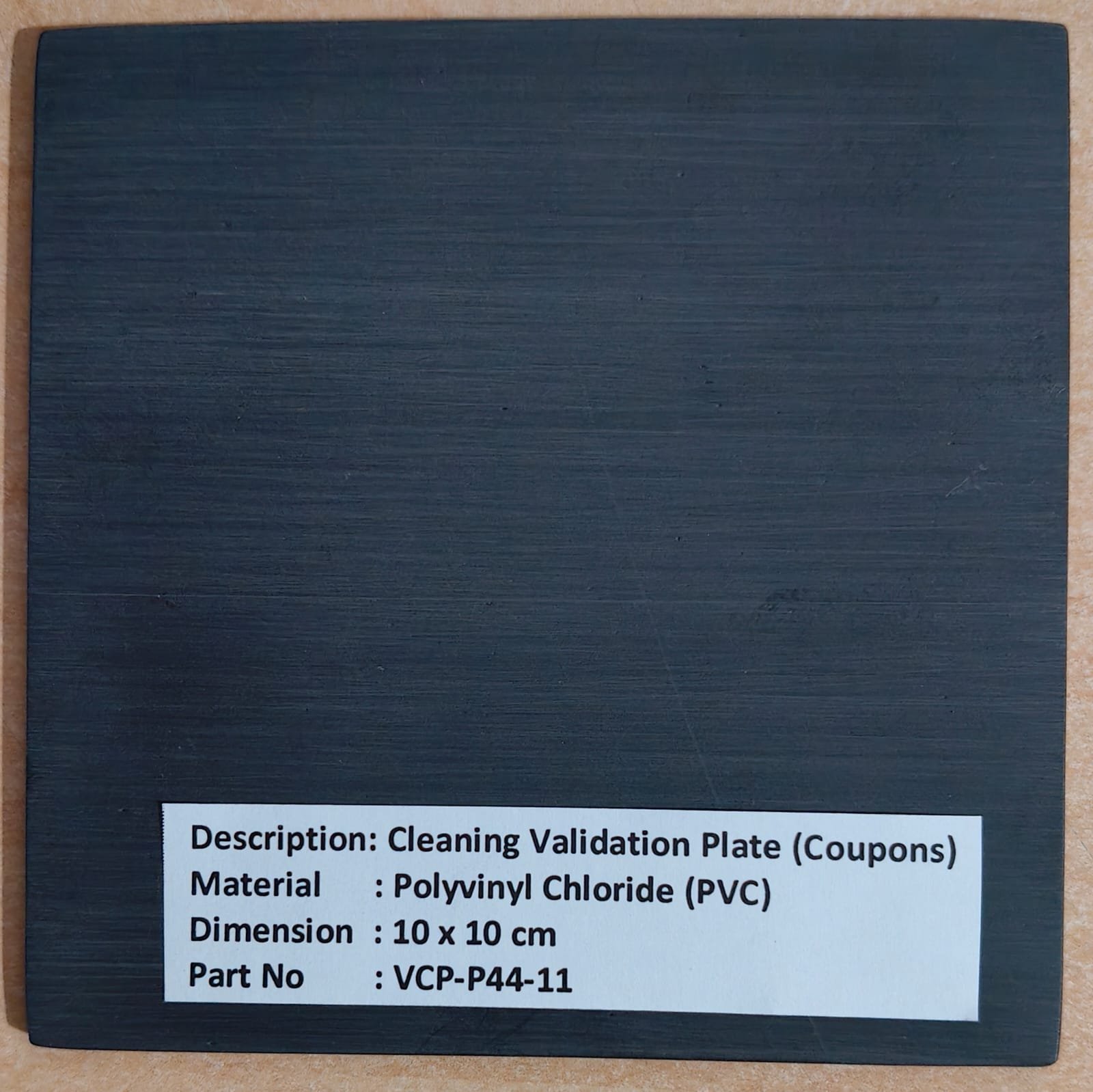
Cleaning Validation Plate (Coupons) – PVC
- Material: Polyvinyl Chloride (PVC)
- Dimension: 10 × 10 cm
- Part No: VCP-P44-11
PVC cleaning validation plate is used to represent polyvinyl chloride surfaces found in utility lines, flexible sheets, and certain process accessories. PVC can interact with plasticizers and may show different residue behavior compared with fluoropolymers or metals. This coupon is practical for validating recovery on a widely used, economical polymer material.
- Typical lab use: residue recovery qualification, detergent compatibility screening, and comparative studies versus PTFE/PEEK/metal coupons.
- Why PVC coupon: supports understanding of residue retention on polymerized surfaces and ensures cleaning methods cover non‑metal contact parts.
- Best for: polymer contact components where PVC is used in ancillary equipment or utility systems.
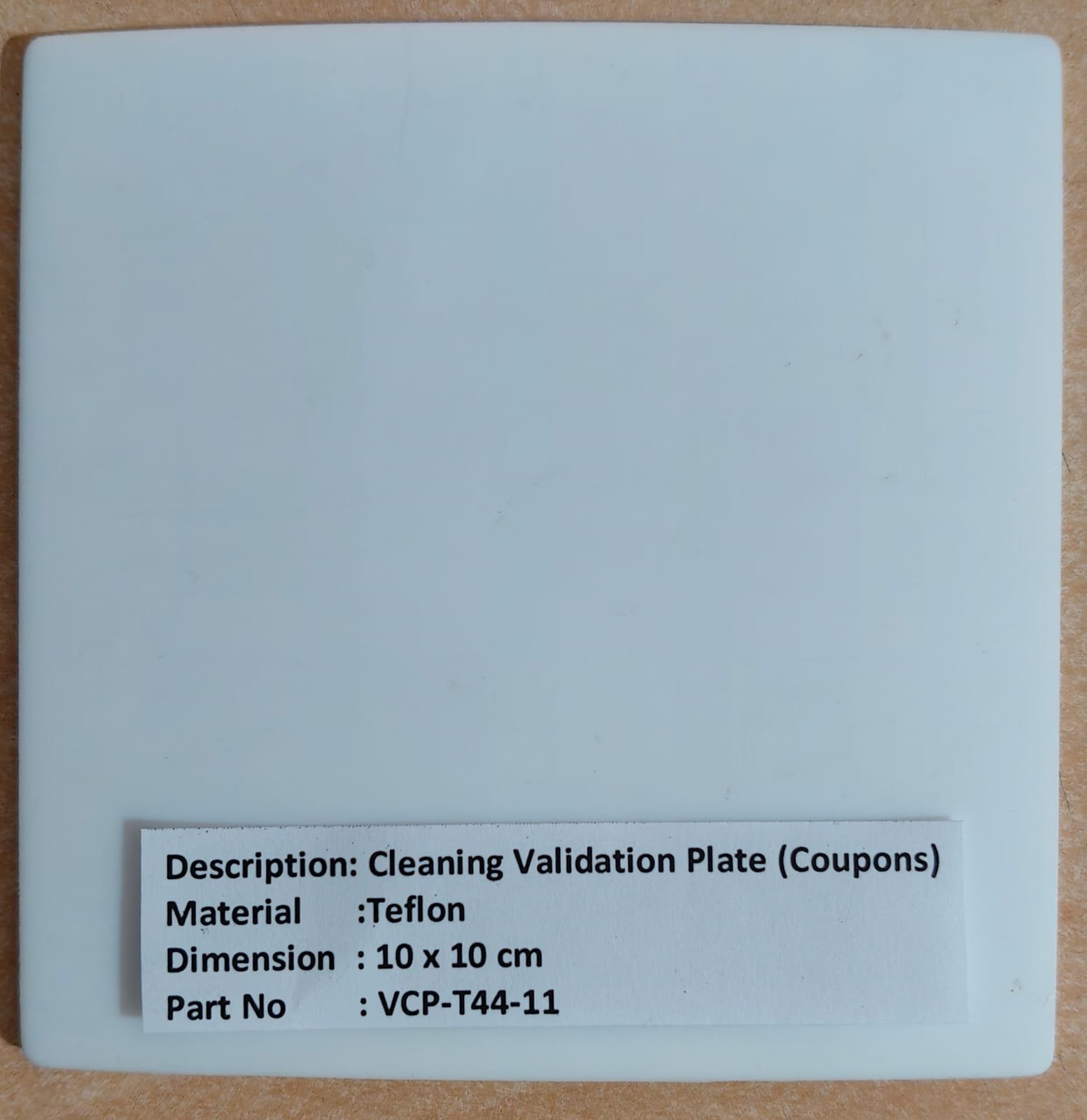
Cleaning Validation Plate (Coupons) – PTFE (Teflon)
- Material: Teflon (PTFE)
- Dimension: 10 × 10 cm
- Part No: VCP-T44-11
PTFE (Teflon) cleaning validation coupon is a critical surface for non‑stick, low surface‑energy applications where residues may spread thinly yet adhere as films. PTFE is chemically inert and heat resistant, so it is used to validate cleaning for fluoropolymer‑lined components, seals, and transfer parts—especially when aggressive chemistries are used.
- Typical lab use: recovery factor determination for thin films, detergent/solvent optimization, and validation on low‑energy surfaces.
- Why PTFE coupon: simulates “non‑stick but film‑forming” residue behavior; useful for demonstrating effective removal without surface interaction.
- Best for: PTFE‑lined valves, gaskets, tubing, and process components exposed to diverse cleaning chemistries.
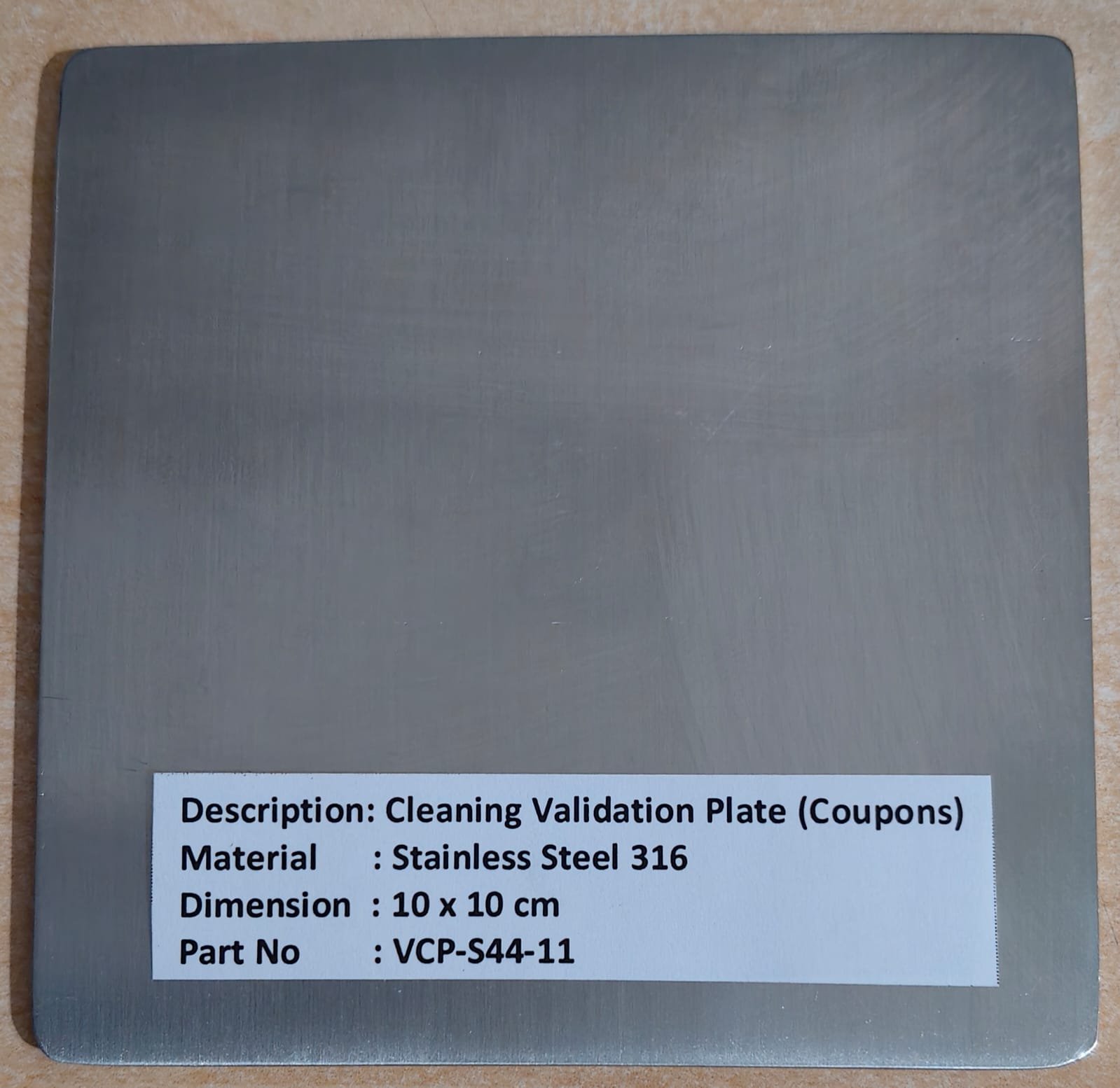
Cleaning Validation Plate (Coupons) – Stainless Steel 316
- Material: Stainless Steel 316
- Dimension: 10 × 10 cm
- Part No: VCP-S44-11
Stainless Steel 316 cleaning validation plate is the primary coupon for pharmaceutical and biotech manufacturing because SS316 is the most common product contact surface in tanks, pipes, mixers, and skids. Use it to qualify CIP cycles, validate swab/rinse sampling recovery, and demonstrate consistent residue removal across repeated cleaning runs.
- Typical lab use: worst‑case API residue recovery, TOC validation, detergent concentration/time/temperature optimization.
- Why SS316 coupon: matches electropolished/finished stainless surfaces used in GMP equipment; provides strong baseline comparability across batches and sites.
- Best for: CIP validation, cleaning verification, and routine re‑validation on stainless process equipment.
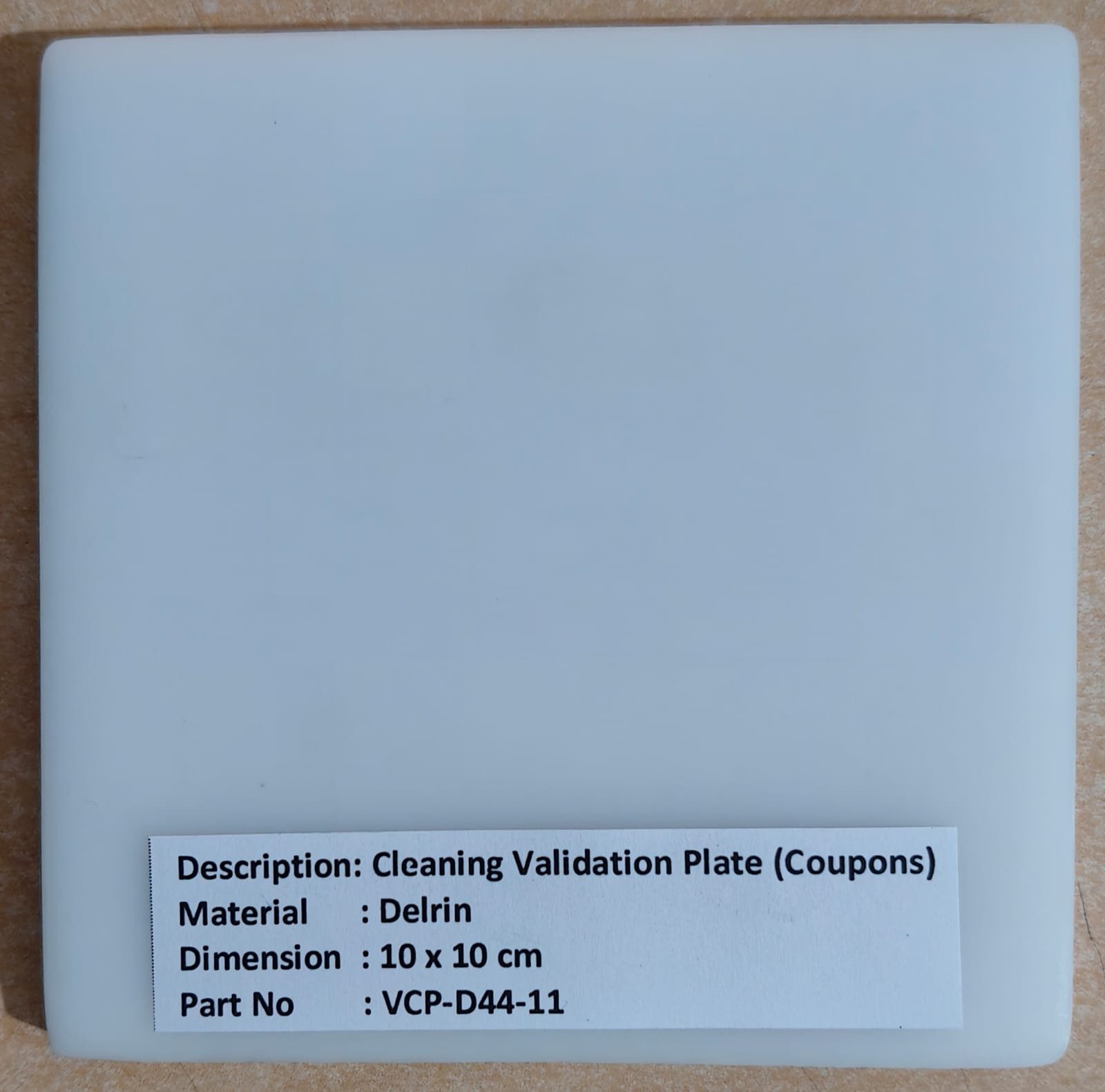
Cleaning Validation Plate (Coupons) – Delrin
- Material: Delrin (Acetal/POM)
- Dimension: 10 × 10 cm
- Part No: VCP-D44-11
Delrin (POM) cleaning validation coupon represents acetal engineering plastic surfaces used in precision components where stiffness, low friction, and dimensional stability are needed. Delrin can show different wetting/retention compared with Nylon or PTFE, making it valuable for a realistic polymer coupon set when validating recovery across multiple contact materials.
- Typical lab use: recovery comparison across polymers, detergent compatibility checks, and cleaning validation for polymer hardware parts.
- Why Delrin coupon: simulates semi‑crystalline polymer behavior, helping confirm that cleaning removes residues from both polar and non‑polar polymer surfaces.
- Best for: sliders, guides, instrument components, and polymer fittings in process and packaging lines.
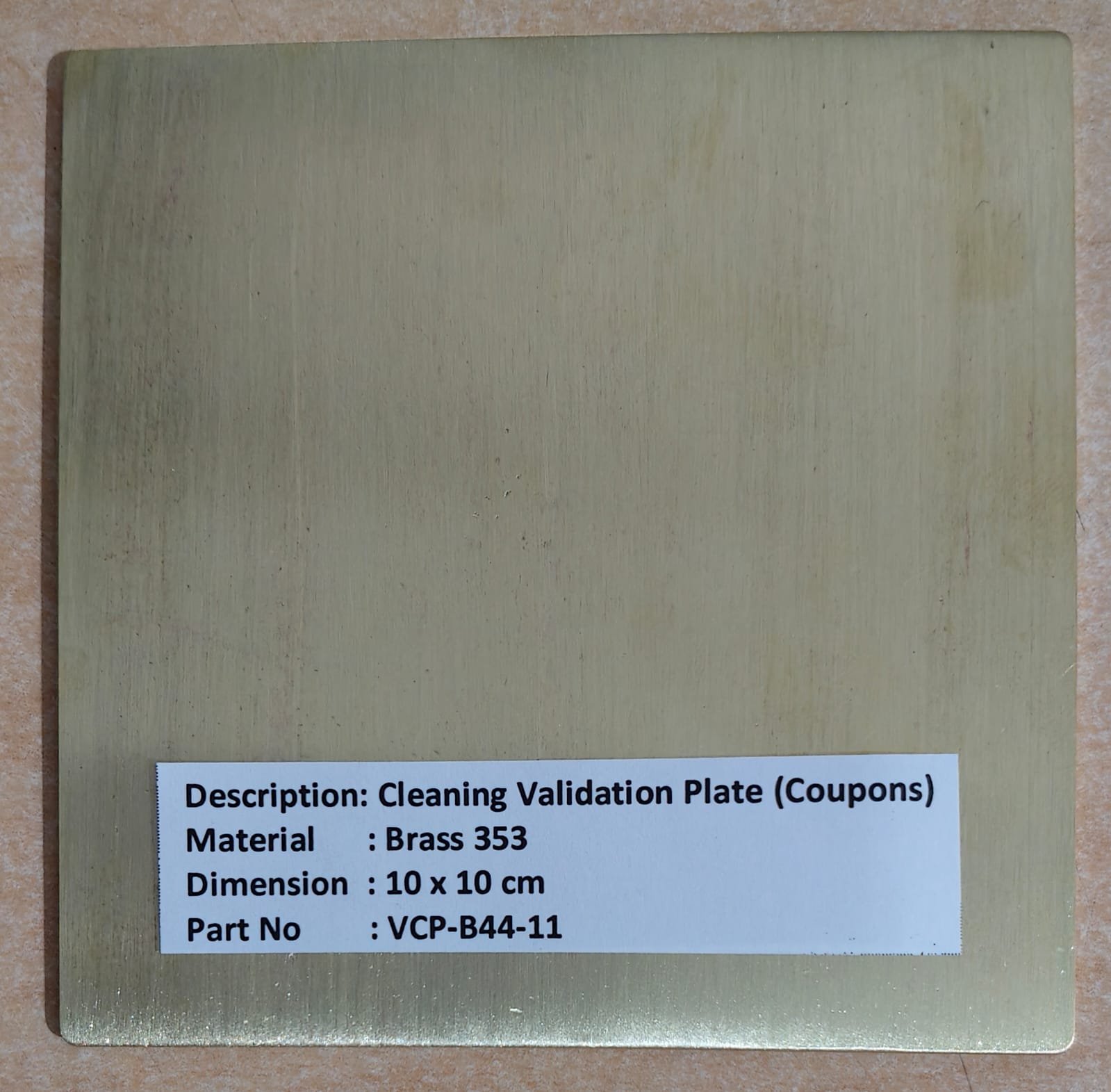
Cleaning Validation Plate (Coupons) – Brass 353
- Material: Brass 353
- Dimension: 10 × 10 cm
- Part No: VCP-B44-11
Brass 353 cleaning validation plate is used where copper‑alloy contact parts exist (valves, fittings, legacy equipment, heat‑exchange interfaces). Brass surfaces can tarnish and may interact differently with certain residues and cleaning agents. This coupon helps validate that the chosen chemistry cleans effectively without unacceptable corrosion or discoloration.
- Typical lab use: cleaning agent screening for corrosion control, residue recovery qualification on copper alloys, and comparative studies vs SS316.
- Why brass coupon: represents non‑stainless metal surfaces and highlights compatibility limits for oxidizers/strong acids that may attack copper alloys.
- Best for: facilities with brass components or where copper‑alloy verification is required for risk assessment.
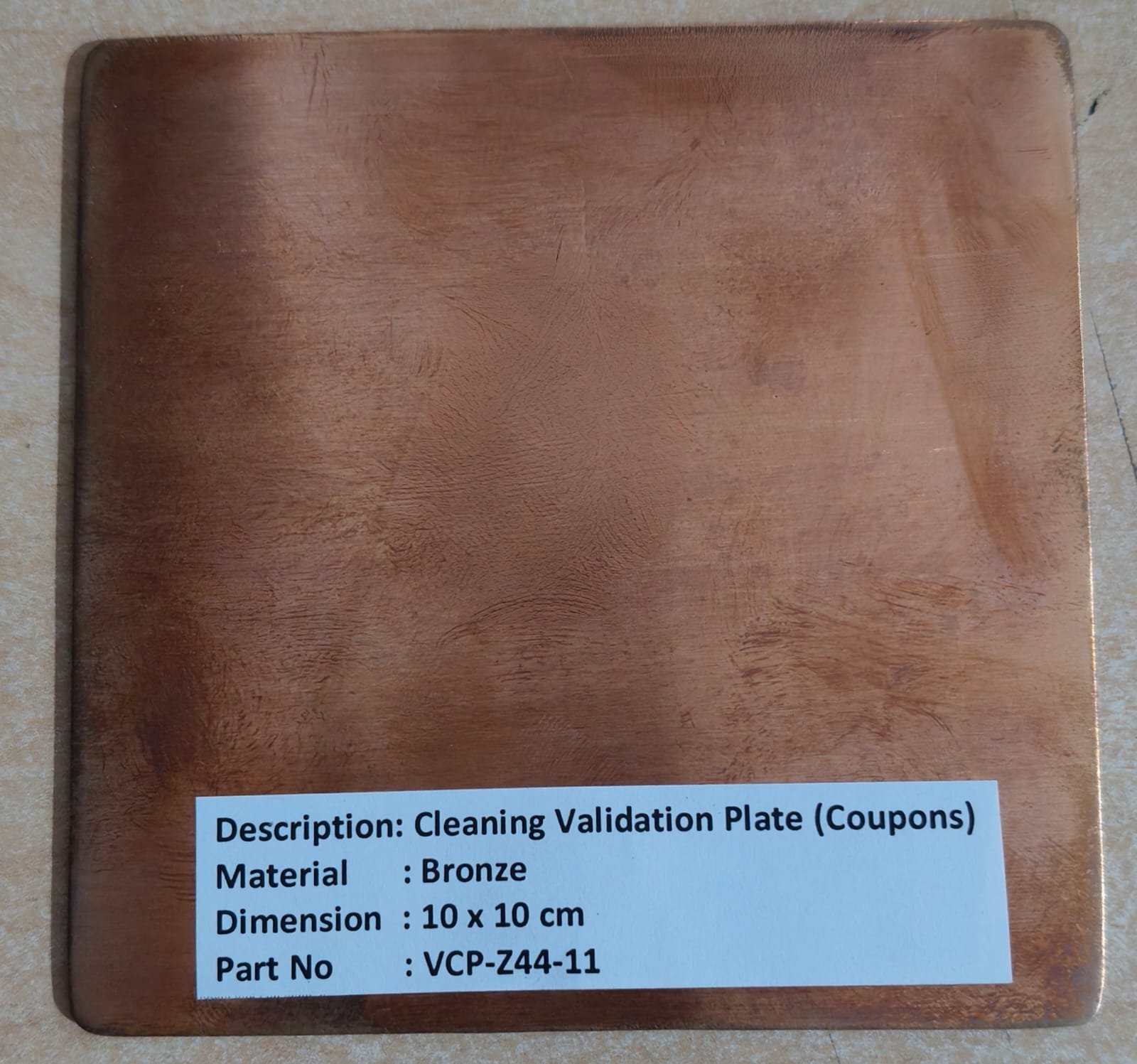
Cleaning Validation Plate (Coupons) – Bronze
- Material: Bronze
- Dimension: 10 × 10 cm
- Part No: VCP-Z44-11
Bronze cleaning validation coupon is selected for copper‑tin alloy surfaces used in certain mechanical parts and legacy fittings. Bronze can develop surface oxides that change wetting and residue adhesion. Using this coupon, laboratories can qualify cleaning effectiveness and evaluate whether the cleaning chemistry maintains acceptable surface condition over repeated cycles.
- Typical lab use: corrosion/compatibility assessment, residue recovery factor studies, and cleaning validation on copper‑alloy surfaces.
- Why bronze coupon: helps demonstrate control of tarnish/oxide formation while ensuring residues are removed to defined acceptance criteria.
- Best for: mixed‑material equipment sets where copper‑alloy components are present.
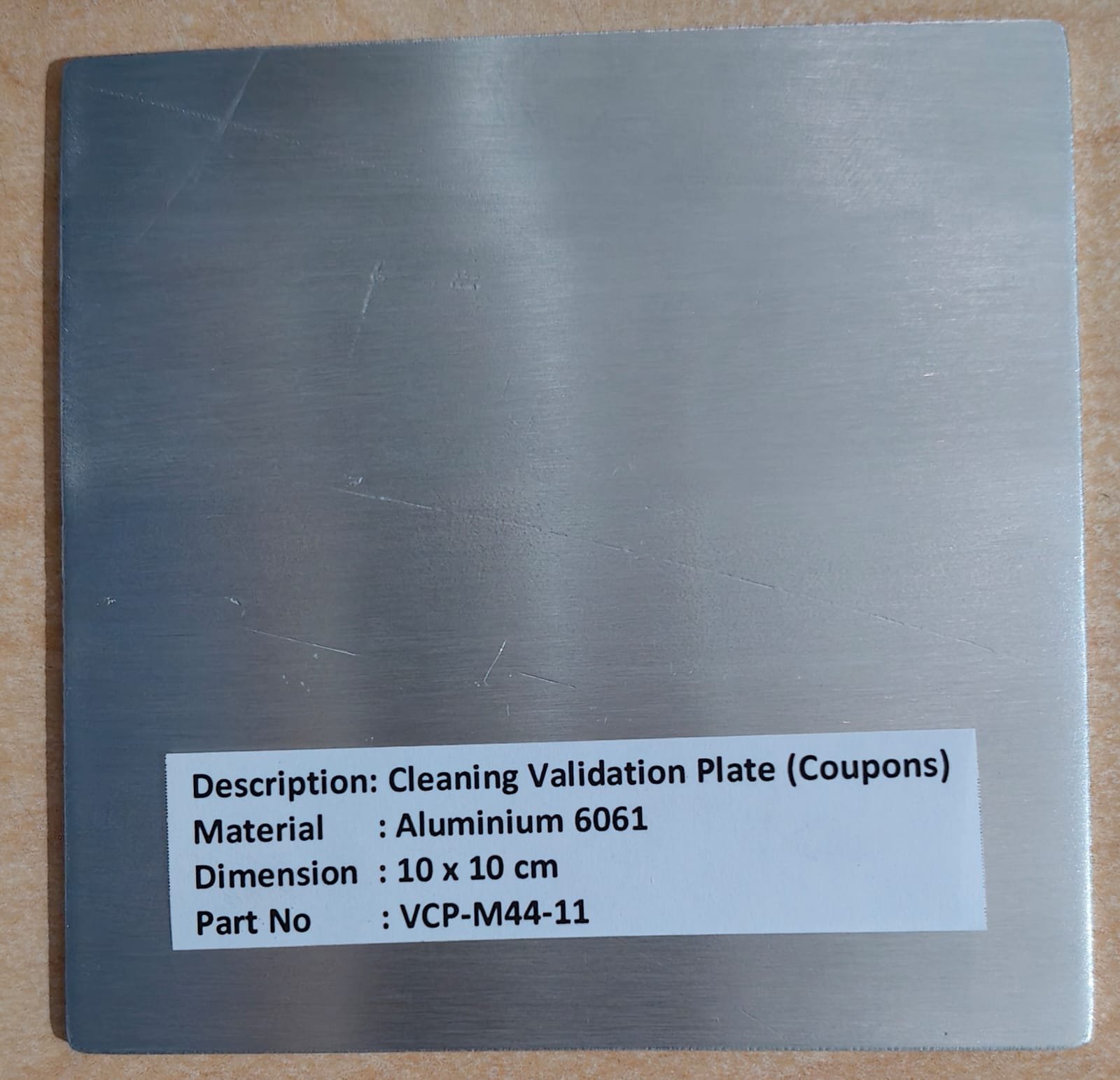
Cleaning Validation Plate (Coupons) – Aluminium 6061
- Material: Aluminium 6061
- Dimension: 10 × 10 cm
- Part No: VCP-M44-11
Aluminium 6061 cleaning validation plate represents lightweight alloy surfaces found in frames, fixtures, and some process accessories. Aluminium can be sensitive to strong alkalis and certain oxidizers; therefore, this coupon is useful to validate both cleaning performance and material compatibility—especially when translating a cleaning program from stainless to mixed‑metal assemblies.
- Typical lab use: compatibility screening, residue recovery studies, and evaluation of pitting/discoloration risk under CIP exposure.
- Why Al‑6061 coupon: verifies cleaning efficacy while controlling corrosion; supports selecting pH and contact time that is safe for aluminium parts.
- Best for: fixtures, accessories, and equipment where aluminium is part of the contact environment or cleaning zone.

Cleaning Validation Plate (Coupons) – Silicon
- Material: Silicon
- Dimension: 10 × 10 cm
- Part No: VCP-I44-11
Silicone cleaning validation plate is used to represent silicone elastomer contact materials (seals, gaskets, tubing, diaphragms) commonly used for flexibility and temperature resistance. Silicone can retain hydrophobic films and can be challenging for swab recovery. This coupon supports realistic validation of cleaning and recovery on elastomeric surfaces.
- Typical lab use: swab technique qualification, solvent/detergent selection for elastomers, and residue carryover risk assessment.
- Why silicone coupon: captures residue absorption and film retention behavior not seen on metals; strengthens worst‑case cleaning validation.
- Best for: elastomer contact parts where residue hold‑up can be higher than on rigid surfaces.
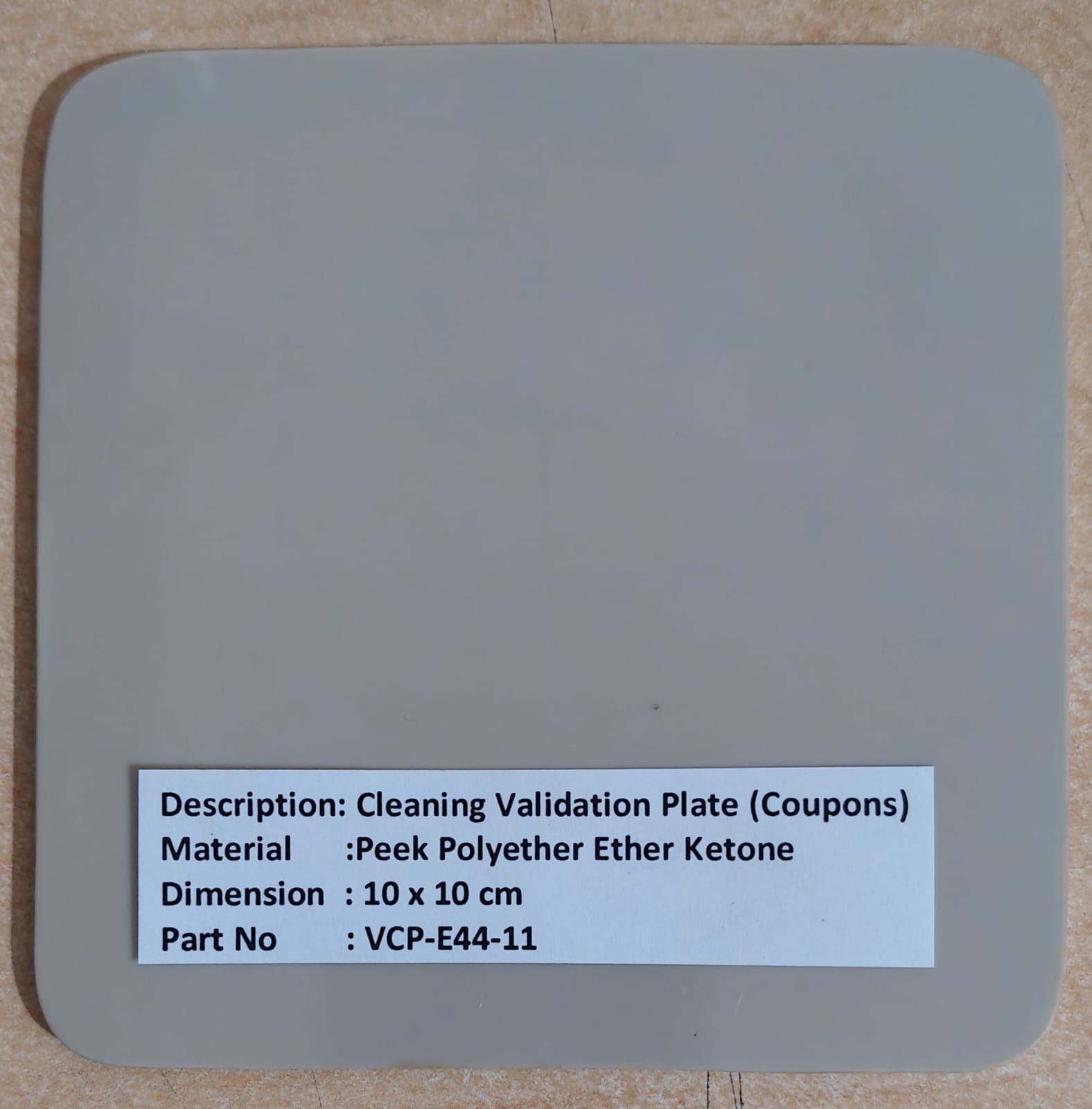
Cleaning Validation Plate (Coupons) – PEEK
- Material: PEEK (Polyether Ether Ketone)
- Dimension: 10 × 10 cm
- Part No: VCP-E44-11
PEEK cleaning validation plate (polyether ether ketone) is chosen for high‑performance polymer contact parts used in harsh chemical and high‑temperature environments. PEEK is common in high‑purity systems and analytical/processing hardware. This coupon is ideal for validating cleaning where strong solvents, elevated temperatures, and repeated cycles are used.
- Typical lab use: recovery factor generation for high‑performance polymers, solvent compatibility verification, and CIP/clean‑in‑place robustness studies.
- Why PEEK coupon: combines chemical resistance with engineered surface properties, ensuring cleaning validation covers premium polymer components in critical systems.
- Best for: high‑purity lines, advanced equipment parts, and applications demanding stable polymer performance.
FAQs – Cleaning Validation Plates (Coupons)
Keyword focus: cleaning validation plates, cleaning validation coupons, coupon plates, 10 × 10 cm coupons, CIP verification, residue recovery.